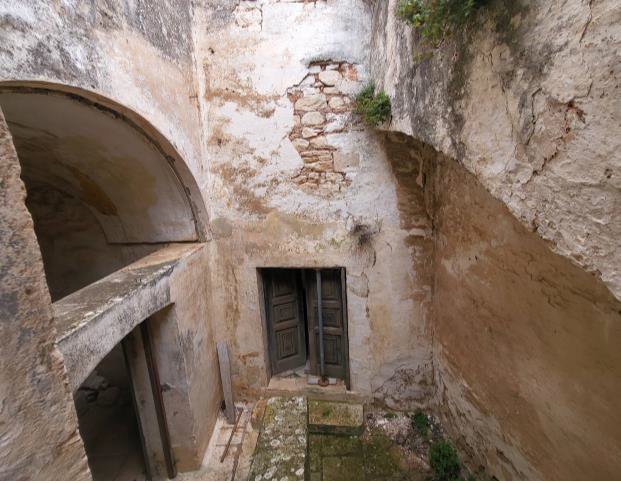
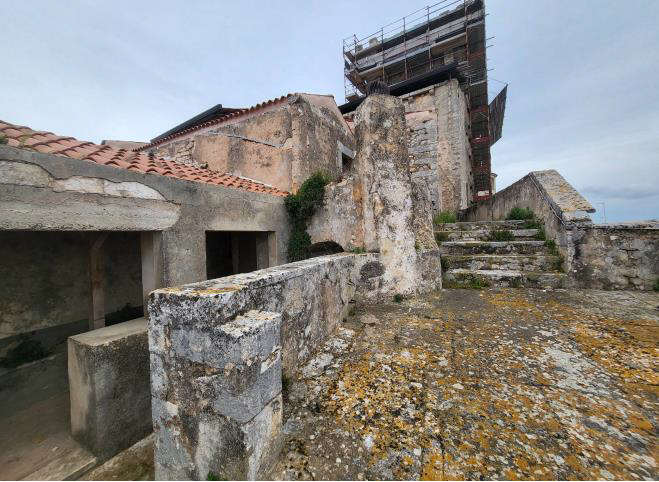
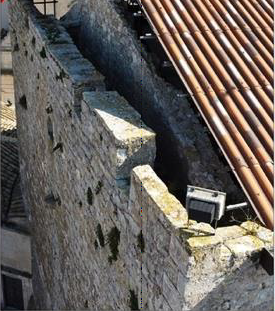
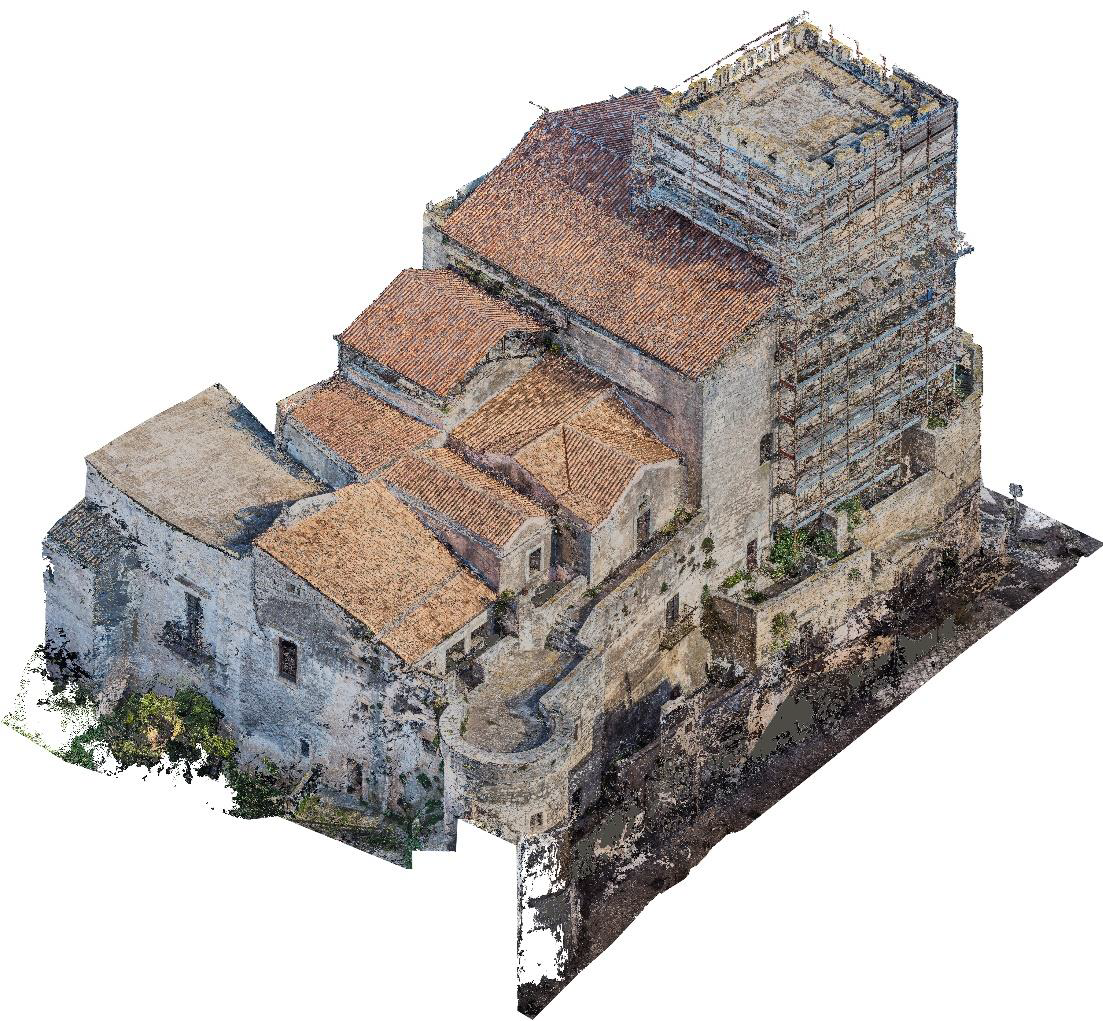
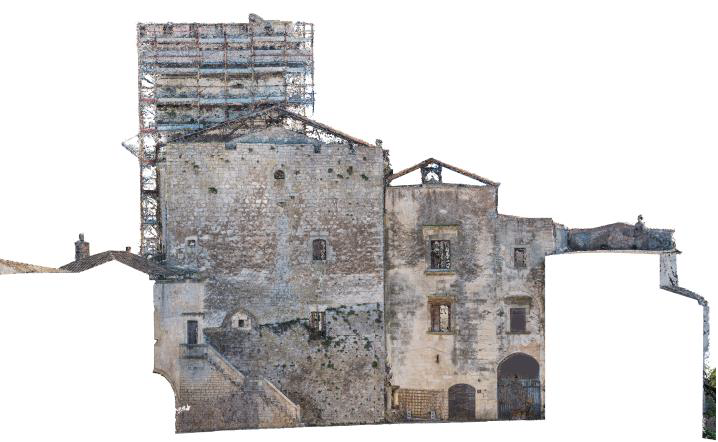
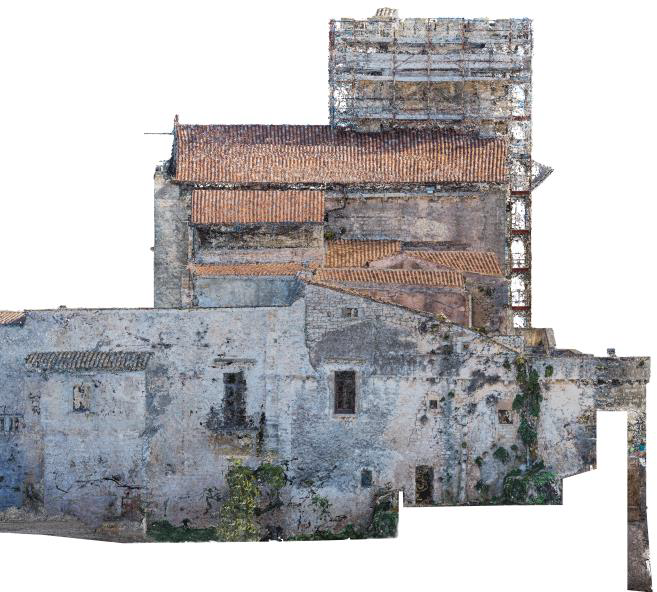
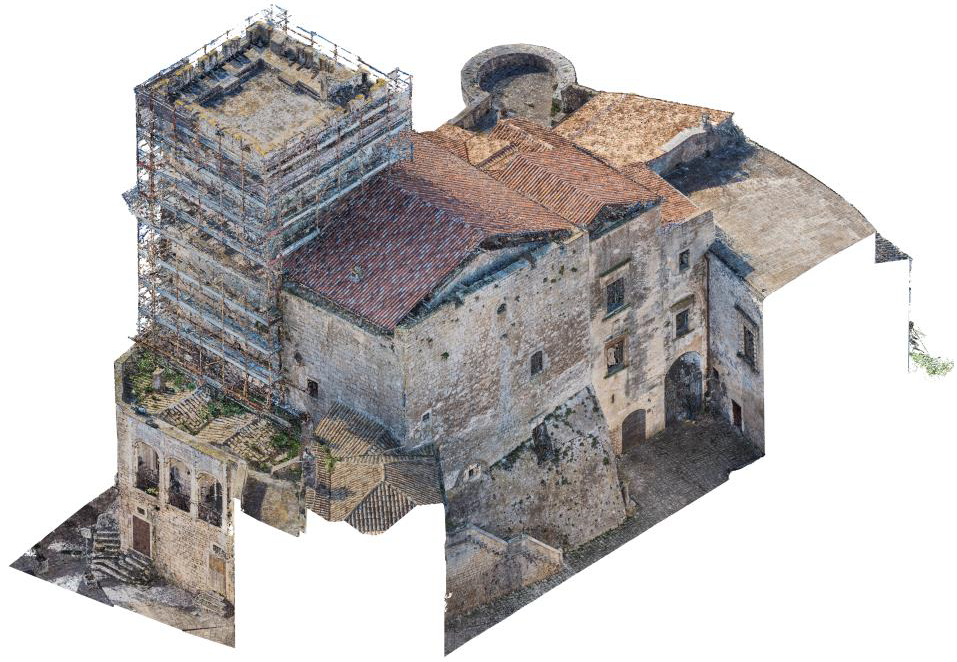
Il Castello Ducale si presenta ai giorni nostri come risultato di una commistione tra architettura militare e dimora nobiliare, costituito da un imponente fabbricato che sorge nel cuore del nucleo storico di Ceglie Messapica. Pur nella varietà altimetrica e composita del manufatto, realizzato su di un solido banco roccioso e rimaneggiato in epoche diverse, è possibile individuare una scansione su quattro piani, escludendo il piano di calpestio del torrione quadrangolare ed i piani di copertura. Esternamente si caratterizza dalla presenza di un torrione quadrangolare -che si erge rispetto all’intero complesso raggiungendo un’altezza di circa 25 m- ricadente nell’area del primo nucleo storico dell’allora fortezza, nonché dalla presenza di un torrione cilindrico sicuramente di una fase successiva. Vi sono poi una moltitudine di elementi architettonici più nascosti – quali modanature, fregi, stemmi ecc. – che caratterizzano il Castello e ci raccontano la sua evoluzione da architettura difensiva a palazzo nobiliare.
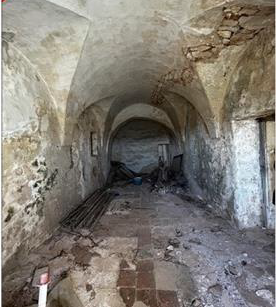
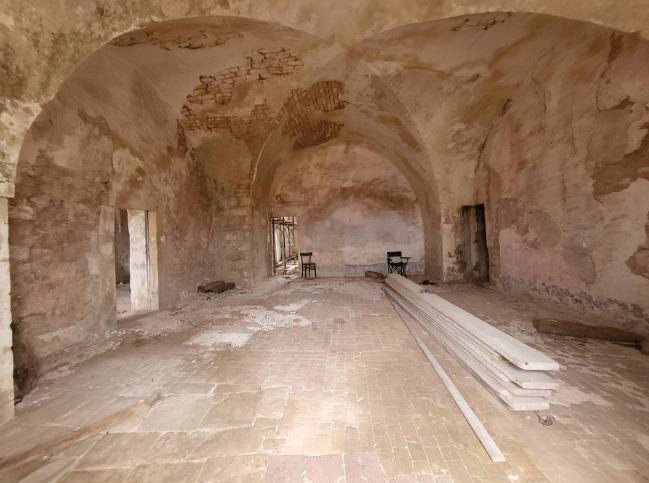
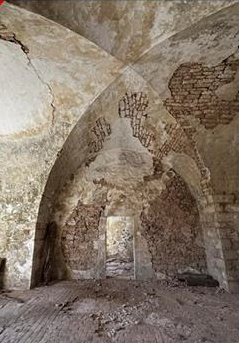
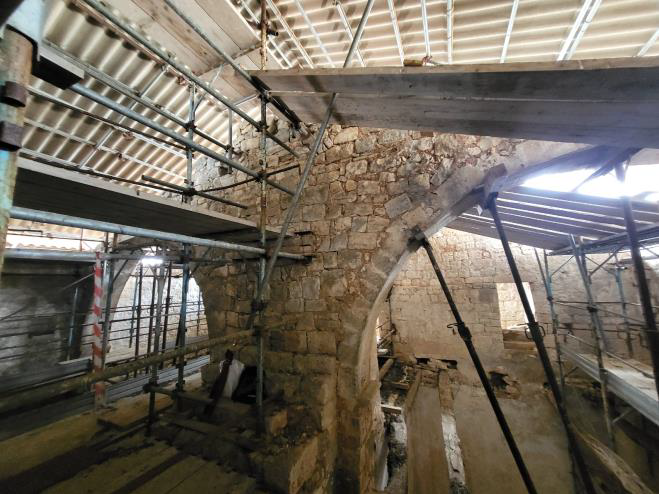
I vari piani sono divisi da volte a “botte”, a “stella”, a “crociera” o a “botte con lunette”, a seconda dell’epoca di costruzione, della forma o dell’importanza del vano coperto, alcuni ancora affrescati, altri vani invece si presentano privi della loro copertura originale sostituita in taluni casi da coperture provvisionali in altri da coperture a falda di recente fattura.
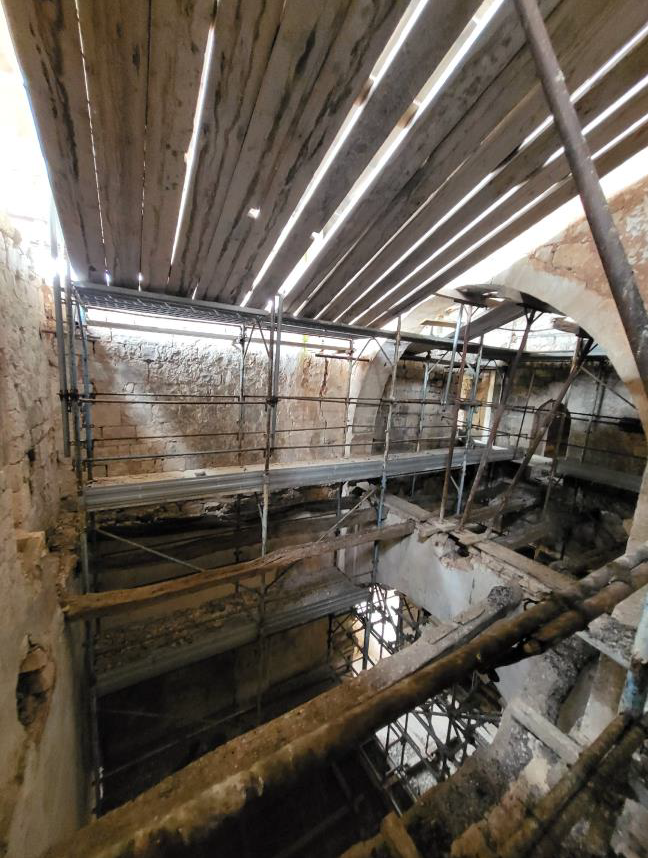
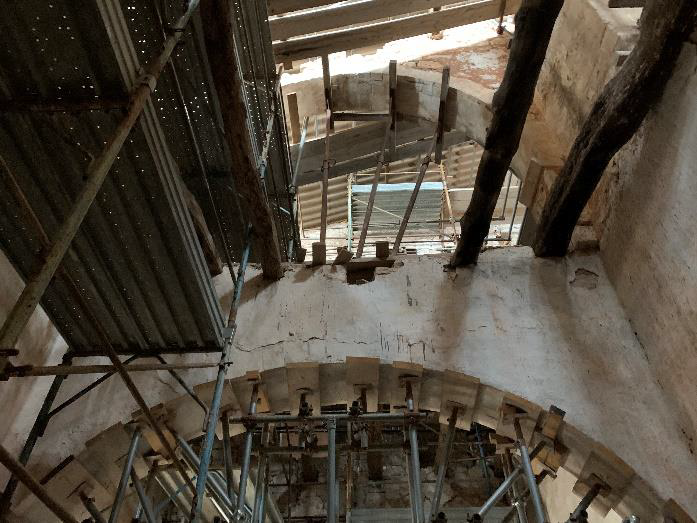
Il complesso presenta importanti problemi statici, difatti tutti gli ambienti del secondo e terzo piano sono attualmente puntellati e necessitano di un urgente intervento di consolidamento strutturale nella loro totalità.
The Ducal Castle today presents itself as the result of a blend of military architecture and noble residence, consisting of an imposing building located in the heart of the historic center of Ceglie Messapica. Despite the varying altimetric and composite features of the structure, built on a solid rocky base and altered in different periods, it is possible to identify a layout with four floors, excluding the ground level of the quadrangular tower and the roof levels. Externally, it is characterized by the presence of a quadrangular tower—which rises above the entire complex, reaching a height of about 25 meters—situated in the area of the first historic nucleus of the original fortress, as well as a cylindrical tower, certainly from a later phase. There are also a multitude of more hidden architectural elements—such as moldings, friezes, crests, etc.—that characterize the Castle and tell the story of its evolution from a defensive structure to a noble residence.
The various floors are divided by barrel, star, ribbed, or barrel vaults with lunettes, depending on the construction period, the shape, or the importance of the covered space. Some are still frescoed, while other rooms present no original ceiling, which has been replaced in some cases by temporary coverings, and in others, by newly crafted pitched roofs. The complex faces significant structural issues; in fact, all the rooms on the second and third floors are currently propped up and require urgent structural consolidation work in their entirety.
Galleria

 Restauro del Castello Ducale